

If you’re researching dental implants Quincy residents trust, you’ve probably come across a term that sounds more complicated than it actually is: the dental abutment. Maybe your dentist mentioned it during a consultation, or maybe you’re simply trying to understand every step of the implant process before committing to treatment.
Either way, you’re not alone. Many patients feel a little lost when technical terms get thrown around, and that confusion can make an already big decision feel even bigger.
The good news? Once you understand what a dental abutment is and why it matters, the entire implant process starts to make a lot more sense. In this guide, we’ll break it down in plain language, explain why this small component plays such a big role, and show you what to expect if you’re considering implants at a dentist Quincy families have relied on for years.
What Is a Dental Abutment, Exactly?
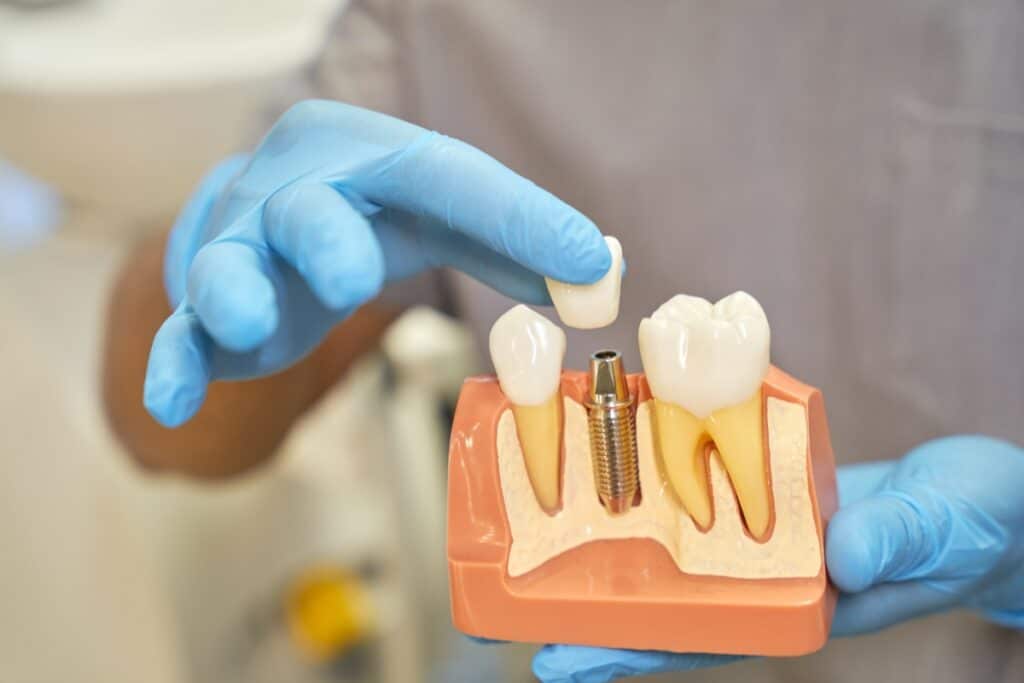
Think of a dental implant as having three main parts, each with its own job:
- The implant post: A small titanium screw placed into the jawbone, acting like an artificial tooth root
- The abutment: A connector piece that attaches to the top of the implant post
- The crown: The visible, tooth-shaped restoration that sits on top
The abutment is the middle piece that links everything together. Without it, the crown would have nothing stable to attach to, and the implant post would simply sit under the gum with no way to support a visible tooth.
In short, the abutment is the bridge between what’s hidden beneath your gums and what everyone else sees when you smile.
Why the Name Sounds Confusing
The word “abutment” isn’t exclusive to dentistry. It’s borrowed from construction and engineering, where it describes a structure that supports weight or connects two parts, like the base of a bridge. Dentists use the term the same way: it’s the support structure connecting your implant to your new tooth.
Why Dental Abutments Matter So Much
It’s easy to assume the implant post or the crown are the “important” parts, since one is surgically placed and the other is what you see every day. However, the abutment plays a role that’s just as critical.
1. It Provides Structural Stability
The abutment distributes chewing forces evenly between the implant post and the crown. Without a properly fitted abutment, the crown could shift, loosen, or wear unevenly over time.
2. It Allows for Precise Fit and Comfort
A well-fitted abutment ensures your replacement tooth sits naturally alongside your other teeth. This affects your bite alignment, chewing comfort, and even how your gums heal around the restoration.
3. It Supports Long-Term Oral Health
Because the abutment sits at the gumline, its shape and fit influence how easily you can clean around the implant. A properly contoured abutment helps prevent plaque buildup and gum irritation.
4. It Offers Flexibility in Treatment Planning
Abutments come in different materials and designs, which means your dentist can customize your treatment based on your bite, aesthetic goals, and the location of the implant in your mouth.
Types of Dental Abutments
Not all abutments are the same. Depending on your specific needs, your provider may recommend one of the following:
- Stock abutments: Pre-made, standard-sized connectors that are cost-effective and widely used
- Custom abutments: Designed specifically for your mouth, often used for front teeth where appearance matters most
- Titanium abutments: Strong and durable, commonly used for back teeth that handle more chewing force
- Zirconia abutments: Tooth-colored and ideal for a natural look, especially in visible areas
- Angled abutments: Used when the implant isn’t positioned in perfect alignment with the bite
Your dentist will evaluate factors like bone structure, gum tissue, and the tooth’s location before recommending the right type for you.
How the Abutment Fits Into the Implant Process
Understanding where the abutment comes into play can help ease any anxiety about the overall procedure. Here’s a simplified timeline:
- Implant placement: The titanium post is surgically placed into the jawbone
- Healing period: Over several months, the bone fuses with the implant (a process called osseointegration)
- Abutment placement: Once healing is complete, the abutment is attached to the implant post
- Crown attachment: The custom-made crown is secured onto the abutment, completing the restoration
In some cases, the abutment and implant post are placed at the same time, but for most patients, this happens as a separate, shorter appointment after the initial healing phase.
Common Questions Patients Ask
Does getting an abutment placed hurt?
Most patients report minimal discomfort. Since the abutment is attached after the implant site has healed, the procedure is typically quick and far less involved than the initial implant surgery. Local anesthesia is usually sufficient.
How long does an abutment last?
With proper oral hygiene and regular dental checkups, abutments are designed to last for many years, often decades. Titanium and zirconia abutments are both highly durable materials.
Can an abutment be replaced if it becomes damaged?
Yes. If an abutment is damaged or needs adjustment, it can generally be removed and replaced without affecting the implant post itself, as long as the surrounding bone and gum tissue remain healthy.
Will my abutment be visible when I smile?
Not if it’s placed and restored correctly. The abutment is designed to sit below the gumline or beneath the crown, so only the natural-looking crown is visible.
Do all dental implants require an abutment?
Almost all traditional implant restorations use an abutment. Some all-in-one implant systems combine the post and abutment, but individual tooth replacements typically use the three-part system described above.
How do I know if I’m a good candidate for dental implants?
The best way to find out is through a consultation. A qualified provider will evaluate your jawbone density, gum health, and overall dental history to determine whether implants, and the type of abutment needed, are right for you.
Choosing the Right Provider Matters
Because the abutment plays such a central role in comfort, function, and long-term success, choosing an experienced provider is essential. The precision required to select, place, and fit an abutment correctly can make a real difference in how your implant feels and performs for years to come.
If you’re exploring dental implants Quincy patients recommend, working with a team that understands every component of the process, not just the surgery, ensures a smoother experience from consultation to final restoration.
Final Thoughts
A dental abutment might be a small part of your overall implant, but its role is anything but minor. It connects your implant post to your visible crown, supports your bite, and contributes to the long-term success of your new tooth.
If you’ve been putting off replacing a missing tooth because the process feels overwhelming, understanding each step, including something as specific as the abutment, can make the decision feel far more manageable.
At Cornerstone Dental Health in Quincy, IL 62301, our team is here to walk you through every stage of the implant process with clear explanations and personalized care. Whether you’re just starting to explore your options or you’re ready to move forward, we’re the dentist Quincy residents turn to for honest guidance and quality treatment.
Contact us today for your appointment and take the first step toward a confident, complete smile.
